

The Critic's Edge: Why My 13 Year Old Self Needed to Start Reviewing

Here is the harsh truth I had to swallow a few years ago: if you just consume books without ever taking the time to organize your thoughts about them, you are basically just doomscrolling on paper. Sure, you are passing the time, but nothing is actually sticking. Looking back at my first few reviews on KRKB, I can literally pinpoint the exact week my brain switched from being a passive consumer to an active thinker. It honestly felt like putting on glasses for the first time.
"When I was 13, I would inhale a 500-page fantasy novel in a weekend, slam the cover shut, and... that was it. The entire universe I had just obsessed over would evaporate from my brain by Tuesday. It drove me crazy."
Thinking About Thinking
Writing a book review forces you to do something schools are weirdly bad at teaching: metacognition. Yes, it is a very fancy word, but it just means thinking about your own thinking. For any teenager trying to survive high school, this is the ultimate hack. A real review isn't just saying 'OMG I loved this book 5 stars' or 'the pacing was slow.' It is about ruthlessly tearing down why an author's choice made your heart race, or why a plot twist fell totally flat. You stop being a spectator and start being an editor.
The Active Retention Pyramid
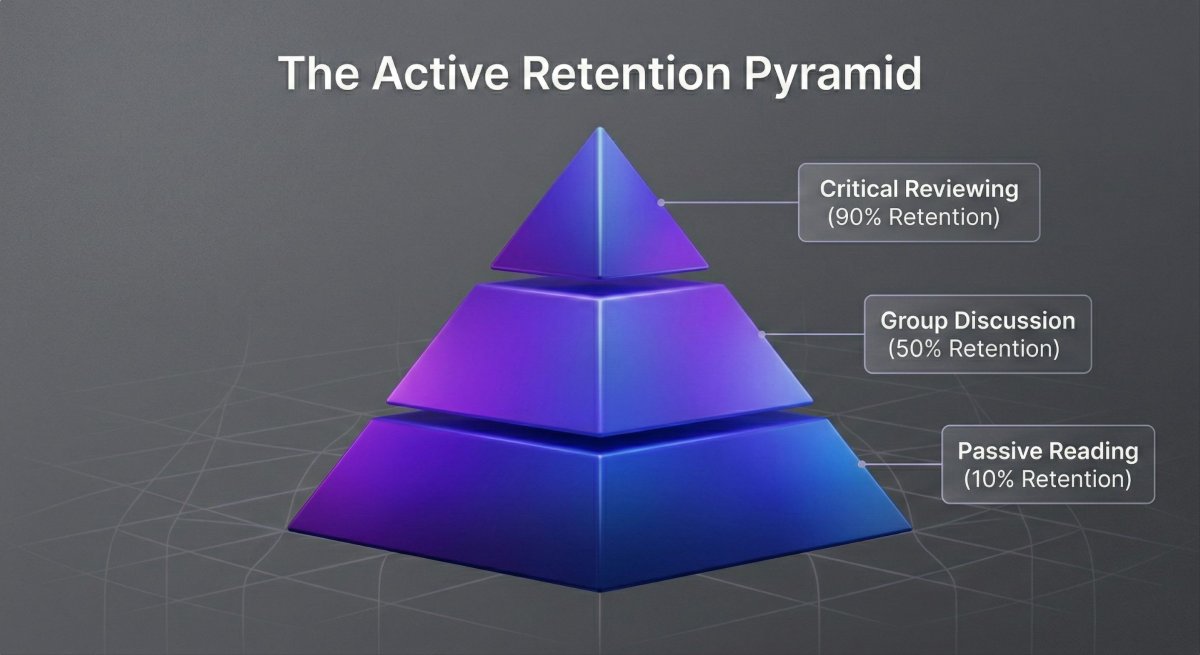
Visualizing the huge 9x increase in long-term information retention achieved through writing reviews.
Wiring Your Brain for the Real World
When you force yourself to articulate why a book works, you are basically hard-coding three massive skills into your brain. And honestly? They extend way beyond getting an A in AP English.
The Three Big Takeaways
Tearing Things Apart (In a Good Way)
To write a review that doesn't put people to sleep, you have to dissect the plot. You learn how narratives are engineered from the ground up, which totally changes how you read, watch movies, and even how you listen to people argue.
The Art of Persuasion
A solid review is basically a mini-thesis. You are trying to convince a total stranger on the internet to invest ten hours of their life into a book. You end up organically building credibility and mastering logic way before you ever step foot into a college lecture hall.
Owning Your Digital Footprint
This is the ultimate flex. Instead of your online presence just being random aesthetic photos or meme reposts, you are actively building a curated, intellectual portfolio. You are leaving a public trail of evidence that proves you can actually think critically.
A Quick Note to Anyone My Age
Please do not look at writing reviews as 'extra homework.' Look at it as taking control of your own narrative. When college admissions officers or future employers inevitably google your name in a few years, what do you want them to find? A blank slate? Or a massive, undeniable portfolio of your critical thinking? Exactly. Pick up a book, grab a laptop, and start tearing it apart.